Strengthening Ankle Joints: Resistance Band Exercises for Stability
Discover how targeted resistance band training improves ankle stability and proprioception. This guide provides evidence-based exercises to support long-term joint health.
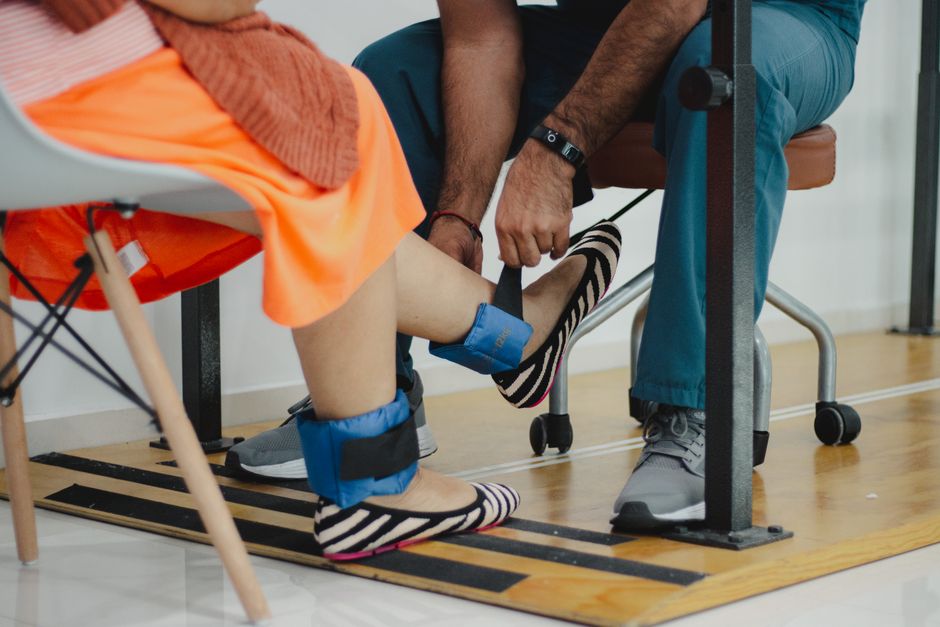
Weak ankles often manifest as a feeling of instability on uneven ground or a history of recurring sprains. Because the ankle is the primary point of contact between the body and the earth, any deficiency in strength or mobility here creates a ripple effect that can impact the knees, hips, and lower back.
Resistance bands offer a scalable way to address these deficits. Unlike static weights, bands provide linear variable resistance, meaning the tension increases as the band stretches, which closely mimics the way muscles and tendons function during movement.
Why it matters
The ankle joint complex is responsible for absorbing the impact of every step. When the surrounding ligaments and muscles are weak, the risk of inversion sprains increases, which can lead to chronic instability. Regular strength training is essential for maintaining the structural integrity of these joints and preventing age-related decline in balance.
Consistent physical activity is a cornerstone of musculoskeletal health. According to the CDC Physical Activity guidelines, engaging in muscle-strengthening activities at least two days a week helps maintain bone density and joint function, which is critical for preventing falls in older adults.
The science
Resistance band training focuses on two primary mechanisms: concentric and eccentric loading. Concentric loading occurs when the muscle shortens to move the joint, while eccentric loading occurs when the muscle lengthens under tension. This latter phase is particularly important for tendon remodeling and strengthening the ligaments that stabilize the ankle.
Furthermore, these exercises improve proprioception – the body’s ability to sense its position in space. By challenging the ankle in multiple planes of motion (inversion, eversion, dorsiflexion, and plantarflexion), the nervous system becomes more efficient at reacting to sudden changes in terrain. The World Health Organization emphasizes that regular physical activity reduces the risk of non-communicable diseases and improves overall functional capacity, including the balance required for joint stability.
Because the ankle is part of a kinetic chain, strengthening it is most effective when combined with other stability work. For instance, those focusing on lower body resilience often benefit from exercises to strengthen hip joints to ensure the entire leg is aligned and supported.
Practical strategies
To begin, select a band with a light to medium resistance. The goal is controlled movement rather than maximum tension. Results vary from person to person, so adjust the resistance based on your current mobility levels.
1. Dorsiflexion and Plantarflexion
These movements focus on the muscles that pull the toes up and push the foot down. Sit on the floor with your legs extended. Loop a resistance band around the ball of your foot, holding the ends with your hands.
- Dorsiflexion: Pull your toes toward your shin against the resistance of the band. Hold for two seconds, then slowly return to the starting position.
- Plantarflexion: Push the ball of your foot away from you, stretching the band as you point your toes. Control the return movement to emphasize the eccentric phase.
2. Inversion and Eversion
These movements target the lateral and medial stabilizers, which are crucial for preventing sprains. Sit with your feet flat on the floor and place a small loop band around the forefoot of one foot.
- Eversion: Push the foot outward, away from the midline of the body, while keeping the heel planted. This strengthens the peroneals.
- Inversion: Pull the foot inward toward the other foot. This targets the posterior tibialis muscle.
3. Ankle Stability Circles
This exercise improves the range of motion and joint lubrication. With a light band looped around the foot, slowly rotate the ankle in a full circle. Focus on a smooth, fluid motion without letting the heel shift position. Perform ten rotations in each direction to increase synovial fluid flow within the joint capsule.
For those who struggle with joint stiffness or inflammation, some readers find a Joint Genesis supplement convenient for supporting joint lubrication alongside their exercise routine.
Common mistakes
- Using too much resistance: Overloading the joint often leads to compensatory movements, where the hip or knee takes over, reducing the effectiveness of the exercise.
- Rushing the eccentric phase: Letting the band “snap” the foot back into place misses the most beneficial part of the strengthening process.
- Ignoring alignment: Performing exercises with the foot turned inward or outward can put uneven pressure on the joint capsule.
- Lack of consistency: Joint stability is built through repetitive, gradual loading; performing these exercises once a month will not produce lasting structural changes.
When to seek help
While resistance bands are generally safe, you should consult a physical therapist if you experience sharp pain, significant swelling, or a “locking” sensation in the joint. If you have a history of severe ligament tears or recent surgery, professional guidance is necessary to determine the appropriate load. Additionally, if you are managing chronic inflammation, you may want to research glucosamine for joint health to understand how nutritional support can complement a physical therapy plan.
Key takeaways
Strengthening the ankle joints requires a combination of strength, mobility, and proprioception. Resistance bands provide a safe, scalable method to target specific muscles that are often neglected during general walking or running. By focusing on slow, controlled movements and avoiding the mistake of over-resistance, you can improve your balance and reduce the risk of injury. Consistency is the most important factor in achieving long-term joint stability.
Frequently asked
How often should I do these exercises?
Three times per week is generally sufficient for most individuals to see improvements in stability without overtraining the tendons.
Can I use these bands if I have arthritis?
Yes, but start with the lightest possible resistance and focus on the range of motion first. Consult your doctor to ensure the specific movements are safe for your condition!
How long does it take to see results?
Most people notice an improvement in balance and stability within 4 to 8 weeks of consistent training!
Which band color should I start with?
Most brands color-code their bands by tension. Start with the lightest color (usually yellow or red) to ensure your form is perfect before moving to medium resistance!
For full pricing, current offers, and the official guarantee, see the maker page for Joint Genesis.
Affiliate link · This may earn us a commission at no extra cost to you.
Reader notes (0)
No notes yet. Be the first to share your protocol experience.